How we combine health, function and aesthetics in restorative dentistry – Denny (Chon Pei) Wang, Specialist Prosthodontist

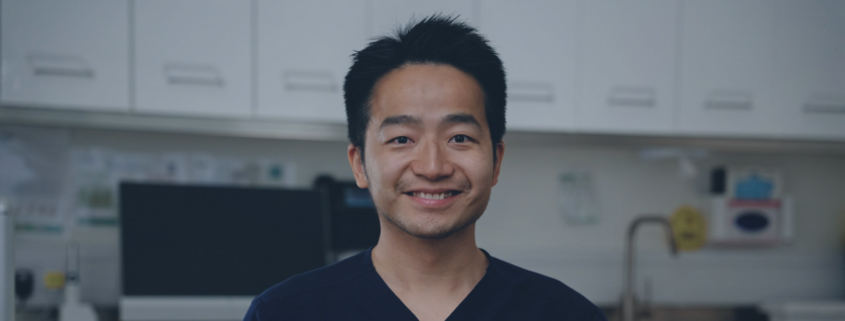
By Denny (Chon Pei) Wang, Specialist Prosthodontist at Devonshire House Dental Practice


Denny (Chon Pei) Wang is a Specialist Prosthodontist at Devonshire House Dental Practice in Cambridge, with particular expertise in prosthodontics, complex restorative treatment, and aesthetic dentistry. His work includes treating tooth wear, restoring damaged teeth, replacing missing teeth, managing bite problems, and planning full-mouth restorations. Alongside his clinical work, Denny lectures at UCL and holds an Honorary Assistant Professor position at the University of Hong Kong.


Patients come to me because there’s something about their smile they want to change. That might be worn or damaged teeth, gaps, discolouration, or sometimes just a smile that no longer feels right for them. 

Treatments like composite bonding, veneers, and crowns can all help – but in my experience, a truly successful result brings together three things: 

  1. Health: We need healthy foundations
  2. Function: We need to understand how the teeth and bite work.
  3. Aesthetics: Then we can design a smile that looks right for that individual patient.

Whether you’re considering restoring your smile or interested in careers at Riverdale Healthcare, in this article I’ll explain how our approach at Devonshire House Dental brings those three elements together – from planning and trial smiles to choosing the right materials and using a combination of digital tools, traditional techniques, and close collaboration with our on-site laboratory.


Book your appointment with Devonshire House Dental. 


Key takeaways

  • Health comes first: cosmetic or restorative treatment needs to be built on healthy teeth and gums.
  • Aesthetics should be individual: the shape, colour, and proportions of a smile should suit the patient, not follow a standard template.
  • Function and appearance should be planned together: the bite needs to work properly as well as the smile looking right.
  • Complex treatment should be carefully planned and trialled: patients should be able to see and refine the proposed result before final treatment where appropriate.
  • Treatment choices should be based on the case, not the trend: materials and technology should be selected for what will work best for the individual patient.

Good cosmetic dentistry starts before the cosmetic treatment

It can be tempting to jump straight to how you want your finished smile to look. Before starting more complex restorative or cosmetic dentistry, however, we need to know that we have a healthy foundation.

That means looking at things like:

  • Tooth decay
  • Gum health
  • Existing restorations
  • Worn or damaged teeth
  • Missing teeth
  • How the upper and lower teeth meet

If there’s active decay or gum disease, for example, we need to address that first. Sometimes another treatment also makes sense before we begin the main restorative work. If someone would like a lighter smile, for example, whitening can help us establish the right base colour before choosing the final shade of composite or ceramic restorations.

The cosmetic result is important – but it needs to be built on healthy teeth and gums rather than used to cover problems underneath.

A smile should be designed for the individual

One of the parts of restorative dentistry I’m particularly interested in is smile design – I don’t believe in giving every patient the same shape or style of teeth. A smile needs to suit the individual person, not conform to some standardised ideal.

When I’m planning treatment, I look at the teeth alongside the patient’s face and smile frame. We can use photographs and digital scans to consider how the teeth relate to features like the eyes and nose, rather than looking at them in isolation.

Some people are looking for a subtle improvement. Others want a more significant change. The right result should also reflect the individual’s end goal rather than somebody else’s idea of the perfect smile.

Patients should be able to test the plan before committing to it


For more involved treatment, I like to spend time planning and trialling the result before we move on to the final restorations.

After taking photographs and scans, we can work with our dental laboratory to create a diagnostic wax-up – a model of the changes we are proposing.

From that, we can create a trial smile.

That allows the patient to see the proposed shape and proportions in their own mouth before committing to the finished treatment.

We can look at:

  • Whether the teeth feel too long or too short
  • How the smile sits within the face
  • Whether the shape looks natural
  • Whether anything needs adjusting
  • How the bite feels

For some patients, one trial is enough. More complex restorative treatment may need further planning.

This stage is vital, turning smile design into a conversation. Instead of asking somebody to imagine the finished result, we can show them the direction we are taking and refine it together.

A smile has to work as well as it looks

Appearance is just one part of restorative dentistry. Some of the patients I treat have significant tooth wear caused by grinding, erosion, or other factors. Others have missing or damaged teeth, or problems with the way their upper and lower teeth meet.

In those situations, we need to understand the bite as well as the appearance.

If we rebuild worn teeth without considering why they became worn, or significantly change their shape without understanding how they meet, we risk overlooking an important part of the problem.

That’s why we assess function throughout the planning process.

The aim isn’t just to create a smile that looks good in a photograph. It should also feel comfortable, work properly, and be planned with long-term durability in mind.    

Digital tools should support clinical judgement, not replace it


Digital dentistry is giving us much better ways to collect information and plan treatment. Scans and photography can help us understand the teeth in the context of the patient’s whole face. That allows smile design to become more personalised.

I don’t believe, however, that everything should become completely digitised just because the technology is available. 

Traditionally, prosthodontic treatment has used physical models and devices called articulators to help assess how the upper and lower teeth meet and move.

Those methods still have value.

Patients get the best results from a hybrid approach: we use digital tools where they give us more information, while retaining traditional techniques where they help us assess function more accurately.

The important thing isn’t whether a tool is digital or physical. It’s whether we are using the right tools to understand their case fully before treatment begins.

The right material depends on the patient


Patients sometimes arrive having already decided that they want composite bonding, dental veneers, or crowns. There’s plenty of information about these treatments online, but in reality there is no single material that is automatically best for everybody.

Composite is a tooth-coloured material that can be used to rebuild and reshape teeth. It can often involve less alteration of the natural tooth and generally has a lower initial cost, but it usually requires more maintenance over time.

Ceramic restorations such as veneers and crowns can offer greater durability and very strong aesthetic results – but they generally cost more and, depending on the case, can require some natural tooth structure to be removed.

The question’s not as simple as “which treatment is best?”

The better question is “which treatment is right for this tooth, this patient, and what we are trying to achieve?”

A big part of my role is explaining the options – their advantages and their compromises – clearly so that patients can make an informed decision based on their wants and needs. 

Close collaboration with our laboratory makes a real difference


Restorative dentistry is often a collaboration between the dentist and the technician who creates the restoration, so one of the advantages of carrying out complex restorative treatment at Devonshire House is having our dental laboratory on site.

For ceramic work, patients can attend the laboratory directly for shade matching, allowing the technician to see the teeth in person and tailor the restoration more closely.

Having the laboratory within the practice also makes it easier to discuss complex cases, check work, make adjustments, and maintain close quality control. If an existing restoration such as an implant bridge fractures, having the laboratory on site can make a much faster repair possible.

For me, that close relationship between patient, dentist, and technician is another part of making each treatment as considered and individual as possible.

Each treatment option is a tool

If you are considering a smile makeover or more complex restorative dentistry, I would encourage you to look beyond the name of the treatment. Composite bonding, veneers, crowns, bridges, and implants are all tools. What matters is how they’re used and why.

A good treatment plan should consider:

  • The health of your teeth and gums
  • Why your teeth are worn, damaged, or missing
  • How your bite functions
  • What you want your smile to look like
  • The advantages and compromises of different treatments
  • How much healthy tooth structure each option may affect
  • What maintenance will be needed afterwards
  • Whether you can preview or trial the proposed result

For me, restorative and cosmetic dentistry is not about creating the same smile for every patient. It’s about protecting what’s healthy, restoring what needs attention, and bringing health, function, and aesthetics together in a way that truly works for the patient.

Book an appointment with Devonshire House Dental

If you are considering restorative or cosmetic dentistry in Cambridge, speak to the team at Devonshire House Dental Practice about your options.
Book your appointment with Devonshire House Dental.

From Ancient Egypt to 3D Printing: How Digital Dentistry is Transforming Patient Care

By Nick Clarke, Lab Manager at Devonshire House, part of Riverdale Healthcare


Most people never see the inside of a dental laboratory. You go to your dentist, and, if they determine that you need restorative dental treatment, they take an impression of your teeth with a traditional tray mould or an intraoral scanner. Then by your next appointment, your crown, bridge or denture has already been created and is ready for the dentist to fit to your mouth – allowing you to chew properly, smile with confidence, and carry on your daily life without worrying that your teeth look or feel unnatural.

Every one of those restorations is made in a specialist laboratory like ours at Devonshire House. Right now, labs like ours are going through one of the biggest changes in their history: a digital revolution that is reshaping how we work and transforming the quality, consistency, and long-term outcomes that patients can expect. In this article, I’m going to explain how that change is taking place, and what it means for patient outcomes.

From ancient methods to modern tech

For hundreds of years, dentures and other restorations were made entirely by hand. A technician would take the mould provided by the dentist, then shape and adjust materials with careful craftsmanship, doing their best to judge the right size, shade, and fit so the restoration blended naturally with the patient’s existing teeth. Many of these techniques can be traced back as far as Ancient Egypt, and remarkably, they remained the standard approach until only a few decades ago.

This traditional process demanded both significant skill and time. A crown or denture might fit well, but achieving the exact same outcome twice was almost impossible because each piece was created from scratch. Today, that era is drawing to a close as digital systems help supplement long-tested techniques, offering levels of precision and consistency that were never possible in the past.

If a patient needs an implant crown replaced, for example, it’s now much easier for us to recreate their previous restoration to ensure that their smile remains exactly the same. Here’s how it works.

Turning scans into smiles 

Once the need for a restoration is confirmed, the process now looks very different to the methods of the past. Instead of biting into a tray of putty, a patient can be scanned in seconds with an intraoral device. This produces a precise digital model of their teeth and mouth, capturing every contour and landmark needed for comfort and accuracy.

That digital model is then opened in advanced design software. Here, technicians can shape and refine the restoration on-screen, adjusting it virtually until the fit and appearance are exactly right. Once approved, the design is passed to production. Milling machines carve the restoration from a solid block of material with remarkable precision, while 3D printers can create an exact replica of the patient’s mouth to work against.

For our patients, this digital shift has two major benefits: consistency and strength. Because every restoration is built from a digital file, we can store those records and use them again in the future, allowing us to reproduce the same result exactly if a replacement is ever needed.

The materials themselves are also far stronger. Milling a crown or dental bridge from a single block makes it much more durable than one layered by hand, reducing the risk of fractures and extending its lifespan. For patients, that means restorations which not only look natural but also stand up to years of daily use.

Digital accuracy elevates craftsmanship

Digital tools are not here to replace human expertise – they are here to enhance it. When machines handle the foundation work with precision, our technicians can concentrate on the artistry: hand-finishing surfaces, applying subtle shades, and creating restorations that blend naturally with a patient’s smile.

This balance of technology and craftsmanship raises the standard of care. Restorations are more lifelike, more durable, and can be reproduced whenever needed, giving patients confidence that their results will stand the test of time.

At Devonshire House, that is what the digital revolution means: restorations you can trust, today and in the years ahead.

Find out how the dental laboratory supports dentists uk wide and at Devonshire House

From reception to social media and treatment coordination: how I shaped a new role at Riverdale Healthcare

By Rebekah Days, Treatment and Social Media Co-ordinator at Alpha Dental Care Blaydon and Vitality Dental Care Bute, Riverdale Healthcare

Summary

Rebekah Days joined Riverdale Healthcare in one of her first dental receptionist jobs after university, without a clinical background or a fixed idea of where her dental career would lead. After spotting an opportunity to improve social media across Alpha Dental Care Blaydon and Vitality Dental Care Bute, she helped grow both practices’ online presence before shaping a new Social Media and Treatment Coordinator role that supports patients, private dentists and the wider practice team.

I started on reception, but knew I wanted to do more

I joined Riverdale Healthcare almost five years ago as a receptionist at Alpha Dental Care Blaydon. I now support both Alpha Dental Care Blaydon and Vitality Dental Care Bute. I had not worked in dentistry before, so reception gave me a good grounding in how a practice works day to day. I learned:

  • The terminology used in practice
  • The different stages of treatment
  • How appointments are booked and managed
  • How much communication sits behind each patient journey

After a couple of years, I knew I wanted more responsibility. I like being busy, and I like having something I can properly get stuck into.

Outside work, I was already doing social media for small businesses, so I could see how important it was becoming. Patients don’t just look on Google anymore. A lot of them now use social media to see:

  • Treatments
  • Before-and-afters
  • Reviews
  • Team content
  • What a practice actually feels like before they get in touch

At the time, our practice accounts were not really being used. I raised it as something I thought we could improve, because I could see there was a gap and I wanted to help fill it.

Read more: How I’m working towards my dental nurse qualification while planning my own aesthetics business

Social media became a way to support patients and grow private dentistry

Once I had the go-ahead, I relaunched the social media accounts for Alpha Dental Care Blaydon and Vitality Dental Care Bute. Because they are two separate Riverdale Healthcare practices, that meant building two accounts and making sure each one reflected the team, treatments and patients at that site.

The content included:

  • Treatment updates
  • Diary availability
  • Events
  • Before-and-afters
  • Day-to-day practice content

When the accounts started doing well, Kathryn Henderson, our Area Manager, asked if I would help other practices in the region get their social media up and running too.

For around six months, I supported several practices across the region. I visited teams, helped with events, took content and spoke to people about what made their practice different.

That part really mattered, because you cannot create good content for a practice if you do not know the team. You need to understand what treatments they offer, what their dentists enjoy doing, and what kind of patients they want to reach.

Once the accounts were established, people within those practices were able to take them forward themselves. That work helped me see how social media could support the wider business, especially around private dentistry.

At Blaydon and Bute, we have:

  • Private dentists with specialist interests
  • An implantologist
  • A sedation dentist
  • A growing focus on specialist private treatment

Vitality Dental Care Bute is also becoming a specialist private centre, with two additional surgeries and more private clinicians joining the team.

As the private side of the practice grew, there was a need for someone who could support both the marketing and the patient journey. That is how my role in practice support developed into Social Media and Treatment Coordinator.

Now, my role includes:

  • Helping manage private diaries
  • Supporting events and open days
  • Speaking to patients about their goals
  • Creating social media content
  • Coordinating with labs and the wider team
  • Acting as a point of contact for private dentists when something needs organising

Because I am not clinical, my role is slightly different from some treatment coordinator roles. A lot of treatment coordinators come from a nursing background, whereas my role is more focused on communication, organisation, social media and making sure things are followed up properly.

That works well for me. I get to be involved in the positive parts of the patient journey – speaking to patients, understanding what they want to achieve, seeing their before-and-afters and helping share those stories.

Read more: From hands-on learner to Clinical Lead: how Riverdale is helping me build a career in dentistry

I want to keep building the marketing side of my career

One of the things I have valued most at Riverdale is that I have been able to put my hand up and try things. This was not a role I stepped into because a vacancy at Riverdale already existed. It came from seeing an opportunity, talking about it, and having people around me who were willing to listen.

Chelsea, our Practice Manager, has always known I like taking on more, so if something comes up, she will ask whether I want to be involved. Kathryn also supported me when the social media work expanded across the region. That gave me more experience across different practices and helped me understand how each site works.

I have also been part of Riverdale’s Voice Forum, where people from practices can share:

  • Feedback
  • Ideas
  • Updates
  • Improvements with the wider business

That has helped me see how much opportunity there is to contribute beyond your own job title.

I’m excited about the next stage for Bute as it becomes a specialist private centre. There will be more to promote, more patients to support and more opportunities to show people what the practice can offer.

Social media will continue to be one of my main interests. If there was ever an opportunity to support marketing or social media more widely across the North East, that is definitely something I would be interested in.

For now, I am focused on helping our own practice grow, supporting our private dentists and making sure patients have a good experience from the first time they hear about us to the end of their treatment.

Explore careers at Riverdale

My career at Riverdale has shown me that progression can come from spotting an opportunity and being willing to put yourself forward.

I joined in a non-clinical role, but I have been able to build my knowledge, develop my interests and shape a role that supports both patients and clinicians.

Explore current career opportunities at Riverdale and see where a dental career could take you.

From dental nurse to Area Manager: how Riverdale helped me build a career in operations

By Kathryn Henderson, Area Manager at Riverdale Healthcare

Summary

After starting her dental career as a dental nurse, Kathryn Henderson moved into retail management, HR and operations before returning to dentistry through a career at Bupa. After she moved to Riverdale Healthcare, she was able to bring those experiences together as an Area Manager, supporting 16 practices across the North East while helping other people explore careers in dentistry and develop their own paths forward.

My career started in dentistry before taking a different direction

I started my career in dentistry in 1995 and qualified as a dental nurse in 1997.

I worked in a dental hospital until around 2005, after I had my daughter. At that point, the hours were difficult to balance with family life, so I decided to move away from dentistry for a while.

That took me into retail, where I joined B&Q in one of their larger stores. I started in kitchen sales, but over time moved into different management roles, including checkout management, profit protection and HR.

At the time, it felt like a completely different direction. Looking back, it was one of the most important parts of my career.

Explore current career opportunities at Riverdale and see where a dental career could take you.

Retail helped me build the management skills I use every day

Dentistry gave me the clinical background, but retail helped me understand the operational side of running a business.

In retail, I learned a lot about:

  • Managing teams
  • Working towards targets
  • Understanding profit and loss
  • Dealing with HR issues
  • Supporting people through difficult conversations
  • Keeping standards consistent across a busy environment

I also completed a Level 5 CIPD HR management qualification, which gave me a stronger foundation in people management.

That experience helped me understand where my strengths were. I realised I enjoyed compliance, HR, operations and working closely with people to solve problems.

When my children were older, I started thinking about returning to dentistry. I still liked the clinical world, but I also knew I wanted to stay in management. For me, the next step was about bringing those two sides of my experience together.

Read more: How I’m working towards my dental nurse qualification while planning my own aesthetics business

Riverdale Healthcare saw how my different skills could fit into a bigger role

Before joining Riverdale, I returned to dentistry as a Practice Manager at Bupa. That role helped everything come together. I was back in a dental environment, but I was also using the management, HR and operational skills I had built outside dentistry.

After a couple of years, I felt ready for the next step. I was hitting my KPIs, including NHS targets and revenue targets, but there wasn’t really a clear route for further progression. I had heard there were development opportunities at Riverdale, so I applied for a Practice Manager role to get my foot in the door.

During the recruitment process, Riverdale Healthcare looked at my CV and recognised that my wider experience could fit a different role. Before I even started, I was offered a Regional Support Manager position instead.

That made a big difference to me. It showed that Riverdale Healthcare was willing to look at the skills I had built across my whole career and how those could be applied to practice support – not just the job title I had applied for.

Since then, my role has continued to develop. I started by supporting eight practices, then moved into an Operations Lead role, and now work as an Area Manager supporting 16 practices across the Newcastle and Gateshead area.

Read more: From hands-on learner to Clinical Lead: how Riverdale is helping me build a career in dentistry

As an Area Manager, I support practices by understanding how they actually work

My role now covers a wide range of operational responsibilities across 16 dental practices.

That includes:

  • Supporting 12 Practice Managers
  • Helping practices deliver their NHS contracts
  • Monitoring private revenue and plan performance
  • Managing compliance
  • Making sure equipment issues are resolved quickly
  • Supporting teams with operational or HR challenges
  • Working closely with clinical leads and senior leadership

A big part of the role is making sure practices are delivering their NHS contracts. Each contract has a set number of UDAs, which are units of dental activity. If a practice does not deliver the required number, there can be financial consequences, so it is important that we monitor performance and support teams where needed.

Some practices are mainly NHS, some are private, and some are a mix of both. Each site has different priorities, different pressures and different teams, so you cannot manage them all in exactly the same way.

That is why I spend a lot of time out in our practices. I work from home for admin one or two days a week, but most of my time is spent visiting sites and speaking directly with Practice Managers, clinicians and team members.

You cannot support a practice properly from a distance. You need to understand the people, the contract, the building, the patients and the day-to-day challenges.

Because I started as a dental nurse, I understand what it feels like to work in practice. Because I have worked in retail management and HR, I also understand how to look at performance, people and operations together.

That combination is what helps me do my role.

Riverdale Healthcare gives people access to support at every level

One of the biggest differences I have found at Riverdale Healthcare is how accessible people are.

In previous roles, it could sometimes be difficult to get hold of the right person. At Riverdale, people are approachable at every level.

I work closely with my line manager, Paula Graham, who is Chief Operating Officer, as well as with Neeraj Diddee, Regional Clinical Director. Neeraj still works clinically as a dentist, which is really valuable because he understands what is happening in practice from a clinical point of view.

My role is operational, but clinical and operational decisions often overlap. If there is something I cannot answer, or something that needs a clinical view, I can involve Neeraj and work through it properly.

That access makes a real difference. It means decisions are more joined up, and it means people feel supported rather than isolated. It is also something I try to pass on in my own role. I want my Practice Managers and teams to know they can come to me, ask questions and get support when they need it.

I want to keep helping driven people move forward

I love seeing others have the same career development opportunities I have. At Riverdale Healthcare, progression does not have to follow one fixed route – dentists have access to training through Riverdale Academy, but there are also huge opportunities to grow in operational roles.

I have seen people join with no dentistry experience and move forward because they are driven, capable and willing to learn. One person I recruited as a receptionist had worked in healthcare, but not dentistry. She progressed into a Practice Manager role and is now deputising for me while she learns more about becoming an Area Manager.

That is the kind of progression Riverdale can support. My own next step is still developing, but longer term I would like to move into a more senior operational role, supporting Area Managers and helping shape how practices are supported across a wider region.

Explore careers at Riverdale

Riverdale has given me the opportunity to combine my dental background with the management, HR and operational skills I developed elsewhere.

Whether you already work in dentistry, are returning after time away, or have built skills in another sector, there may be more opportunities than you realise.

Explore current career opportunities at Riverdale and see where a dental career could take you.


Jack Dowling

From hands-on learner to Clinical Lead: how Riverdale is helping me build a career in dentistry

By Jack Dowling, Clinical Lead and Associate Dentist at Alpha Dental Gosforth, Riverdale Healthcare

Summary

After joining Riverdale Healthcare in 2021, Jack Dowling has progressed into a Clinical Lead by developing his skills through hands-on experience in practice, supported by direct access to senior clinicians and targeted training through the Riverdale Academy – and is now working towards supporting other dentists who learn in the same practical way.

I’ve always learned quickest through practical, hands-on work

I’m Jack Dowling, Clinical Lead and Associate Dentist at Alpha Dental Gosforth, part of Riverdale Healthcare.

Throughout my training and my career as a dentist, I have always found that I developed my skills much better through practical experience, rather than through lectures or exam revision. That really became clear once I finished my formal dental training and started treating patients day to day. Working through real cases and deciding how to approach a challenge, which materials to use, or how to manage a more complex treatment plan, helped my skills develop much quicker.

Being able to see how those decisions played out over time – the progress of a restoration, whether a patient responded well to treatment, and what I would do differently next time – is what built my confidence. For me, that hands-on exposure isn’t just what made things click – it’s what made them stick.

In this article, I want to talk about my journey from early-stage training into a Clinical Lead role, and how the environment at Riverdale – particularly the support from the clinical team and the Riverdale Academy – is helping me continue to develop and work towards supporting other dentists in the same way.

Working as both an Associate Dentist and Clinical Lead means I’m developing my own skills while learning how to support others

At Alpha Dental Gosforth, my role combines general dentistry with a Clinical Lead position, which means I am involved in cases beyond just my own patient list.

On a typical day in my life at Riverdale, that might include:

  • Reviewing a colleague’s treatment plan before they start a case
  • Advising on which materials or techniques are likely to be most predictable
  • Stepping into the surgery to guide part of a procedure, particularly where it’s new to them
  • Treating my own patient list
  • Liaising with the management team

That gives me exposure to a wider range of cases and decision-making than I would see working independently.

The key difference is that I’m not just observing – I’m actively involved in helping other clinicians work through those decisions. That’s where a lot of the development comes from.

It’s helping me build two skillsets at the same time:

  • How to break down and explain clinical decisions clearly to someone else
  • How to stay sharp in my own work by constantly reviewing what works, what doesn’t, and why

In short, my career as a dentist at Riverdale is allowing me to support other dentists in a practical, chairside way while continuing to develop my own clinical skills – keeping the day-to-day varied while building towards my longer-term goal of moving into education.

I’ve been able to focus on the work I enjoy most

At Riverdale, I’ve been able to continue developing in areas I’m particularly interested in – especially restorative dentistry, alongside orthodontic and aesthetic treatments.

That’s important to me, because it’s the type of work I find most rewarding.

A lot of the cases I enjoy involve seeing patients over a longer period of time. A typical journey might include:

  • Stabilising oral health and addressing immediate issues
  • Building consistency with hygiene and maintenance
  • Moving into aesthetic improvements like whitening or alignment

What stands out is the shift in mindset. Patients go from coming in with problems to asking about improvements they’ve always wanted but never thought were possible.

I have a personal interest in dental photography, and being able to show patients where they started compared to where they are now makes that progress very clear. Seeing that transformation – both in their oral health and their confidence – is a big part of why I’ve chosen to focus on this area.

Being able to develop in that direction, while also taking on more responsibility in the practice, is what has made my progression at Riverdale feel both structured and personally rewarding.

Riverdale’s leadership is directly involved in my development

The hands-on experience I get day to day is backed up by structured training through the Riverdale Academy.

That has included:

  • Postgraduate training in restorative dentistry and endodontics
  • Courses through Riverdale on photography, dentures, endodontics, composites, leadership and teamwork, and communications
  • Ongoing development in orthodontics, including an upcoming fixed braces course outside of Riverdale but recommended by their orthodontic leads

The key difference is that this training isn’t separate from practice – it builds directly on the types of cases I’m already seeing.

A big part of that is being able to speak directly with people like Neeraj Diddee, Clinical Director, as well as Guy Wells and Ben Wild in the clinical leadership team. In a network of over 60 practices, having that level of direct access to senior clinicians is rare – and it means I can get clear, practical guidance on what the right next step looks like.

That combination of practical experience and targeted development has already opened up further opportunities, including working in a referral practice, and is shaping what I want to do longer term.

Looking ahead, I’m interested in moving into mentorship

I’ve completed some of the training towards becoming an educational supervisor, and while it doesn’t fully align with my current role, I’d still love to find opportunities to mentor younger clinicians within Riverdale.

A lot of my own development has come from:

  • Learning chairside through real cases
  • Building confidence through repetition
  • Improving by reflecting on outcomes

Not everyone develops best in a classroom, and some clinicians progress much faster once they’re in practice. Being able to support dentists like that – the ones who learn by doing, as I did – is exactly what I want to build towards.

Explore careers at Riverdale

Riverdale has allowed me to develop quickly through hands-on experience, while also having access to the right support and training to move forward.

Whether you want to focus on clinical progression, skill development or education, there is a clear path forward.

Explore current career opportunities at Riverdale and see where a dental career could take you.


How I’m working towards my dental nurse qualification while planning my own aesthetics business

By Isabella Isaac-Griffiths, apprentice dental nurse at Stafford Dental Surgery, Riverdale Healthcare

Summary

After starting a beauty business as a teenager, Isabella Isaac-Griffiths is now working towards her dental nurse qualification at Stafford Dental Surgery while building the skills and experience she hopes will one day support her own aesthetics business.

Training as a dental nurse has opened up opportunities I never expected

When I finished my A-levels with three As, I thought my next step would be university. My original plan was to study law, but before committing I decided to spend some time working and exploring different options.

That decision led me somewhere unexpected – an apprentice dental nurse role through TempDent at Stafford Dental Surgery, part of Riverdale Healthcare. At the time, I didn’t know much about dentistry or what a dental career could look like.

Once I started, I quickly realised how much responsibility the role involves and how many different skills it requires. A typical day can include:

  • Assisting dentists during procedures
  • Preparing surgeries and equipment
  • Sterilising instruments
  • Updating patient records
  • Managing stock and supplies

Alongside the practical work, I’m studying towards my dental nurse qualification through Riverdale’s clinical training courses, which involves one day of learning each week while working full time in the practice.

Being part of a close-knit team and working directly with patients has made the role far more rewarding than I expected. It has also helped me see how many different directions a dental career can take.

Just as importantly, working in the practice has given me opportunities to develop skills I hadn’t expected to use in a clinical environment.

Explore current career opportunities at Riverdale and see where a dental career could take you.

The practice helped me develop business skills alongside my clinical training

A few months after joining the practice, I mentioned to our practice manager, Mel, that I was comfortable using social media. She asked if I’d like to take over the practice’s TikTok account.

At the time the account had very little activity, so I began experimenting with different types of content. Social media can be unpredictable, but relatable posts tend to perform well. One video ended up reaching more than 1.4 million views.

The opportunity also drew on experience I had built earlier. While studying for my GCSEs and A-levels, I ran a small beauty business offering eyelash and eyebrow treatments. Managing that business meant handling:

  • Social media promotion
  • Client bookings and appointments
  • Customer communication
  • Payments and basic business admin

Without realising it at the time, those early experiences helped me understand how online platforms work and how to connect with an audience – skills that have turned out to be surprisingly useful during my life at Riverdale while training as a dental nurse and contributing to the practice’s marketing.

Working in dentistry showed me how much dental nurse career progression is possible

The longer I’ve worked in dentistry, the more I’ve realised how many opportunities exist within a dental career.

One of the things that surprised me most is the range of dental nurse career progression available once you qualify. Dental nurses can develop their careers in treatment areas such as:

  • Orthodontics
  • Radiography
  • Oral health education
  • Practice management

Seeing those pathways has helped me understand how flexible a dental career can be and how many different directions it can lead.

Dental nursing is helping me build the foundation for my future aesthetics business

My own long-term ambition is slightly different from the routes many dental nurses take. I’d like to move into facial aesthetics and eventually run my own aesthetics business.

Working as a dental nurse at Riverdale is helping me build the right foundation for that goal. Every day I’m developing clinical knowledge, learning more about facial anatomy, and gaining experience working directly with patients.

At the same time, the business and marketing skills I developed earlier are helping me understand how to attract and build relationships with clients.

Together, those experiences are starting to come together in a way I never expected when I first applied for the role.

Is dental nursing a good career for you?

Working in dentistry wasn’t part of my original plan – but from my experience so far, it’s a great option for people who enjoy:

  • Working with people
  • Learning practical skills
  • Being part of a supportive team

At Riverdale, I’ve been able to start building a dental career, gain real experience and work towards my dental nurse qualification while working at Stafford Dental Surgery.

For me, it’s been the perfect place to start building the future I want – and whether you’re thinking about dental nursing or exploring other vacancies, Riverdale offers a wide range of opportunities to learn new skills and grow your career.

Explore careers at Riverdale

Explore current career opportunities at Riverdale and see where a dental career could take you.